
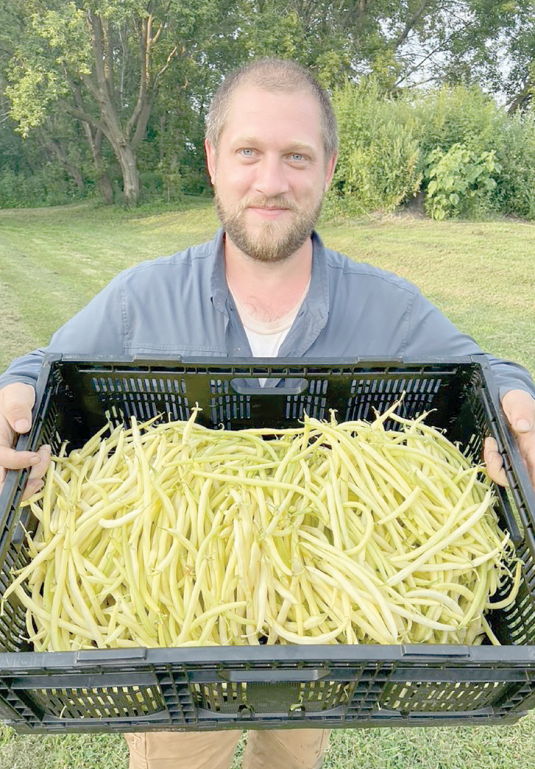
Michael Johnson of Janesville’s RCR Farm
Janesville's RCR Farm is using new approach
Thu, 06/20/2024 - 5:19pm
“People want to know more about the food that’s going into their bodies." — Michael Johnson
Michael Johnson and Matt Oelke, both 38, are using “bio-intensive” farming as they operate RCR Farm, currently in its sixth year–although the first three were somewhat experimental, according to Johnson. They grow fruits, vegetables and even mushrooms on an amount of land that might have been a very large family garden back in the 1930s and 40s. They plant on the homesteads of two Janesville area farms owned by their families for generations. The center of operations is on the old Wallace Santo farm and is where Johnson’s mother spent her childhood. Johnson describes the company address at 35419 Sixth Street outside Janesville as being “within spitting distance” of Indian Island Winery and Autumn Acres Pumpkin Patch.
The small staff consisting of Johnson, Oelke, some family members and two employees–all of whom are either retired or working part time elsewhere–select, plant, nurture and harvest their crops, which are then sold directly to consumers using a number of outlets.
One is the Mankato farmers’ market, held Saturday mornings in the Best Buy parking lot from May to September. The market is also open Thursdays from 3:30 to 6:30 p.m. During those times, RCR sets out whatever fruits, vegetables and herbs are in season.
RCR also has a “farm to table” arrangement with the food service at NRHEG schools. The district’s food service purchases fresh produce from the farm; school staff washes and prepares it in its kitchens, and then sets it out for students to select as part of their meal–either from a salad bar or directly from the main serving line.
Another system RCR began last year and is refining for the 2024 season is “community support agriculture.” Johnson speaks of the local foods movement which has been popular in his wife, Ellen’s, home state of California since the 1970s. “People want to know where their food comes from. Buying local is one way to do that.”
Based on the growing interest in natural production methods, RCR Farm has a program under which people can purchase shares in the produce. Those who pay an annual membership fee of about $600 will get first pick of items from each week’s crop.
“People want to know more about the food that’s going into their bodies,” he says. “They want some confidence it’s been produced in a safe, environmentally responsible way.”
To reduce “inputs” in the RCE gardens, ground cover is used between rows and weeds are pulled by hand. For fertilizer, RCR uses only composted organic matter and manure. Netting is used to keep pests away, and on rare occasions a chrysanthemum-based pesticide is used to repel insects. “We grow everything the same way we would for ourselves,” says Johnson. “It’s more work and comes at a slightly higher cost, but we have a high-quality, trustworthy product. Nobody has to worry about crazy chemicals.”
The farm also offers “bulk pricing” for those who want to freeze or can fresh produce.
To keep their production as smooth and efficient as possible, Johnson says the farm “pushes the season” by starting many of its plants in a greenhouse before moving them to the outdoor garden plots once the weather is suitable. To make efficient use of their relatively limited space, RCR grows tomatoes and cucumbers and other vine vegetables on trellises.
As the growing season advances, RCR customers can watch for an impressive variety of products. Johnson names many standards–carrots, cabbage, green beans, broccoli, cauliflower, strawberries, raspberries–and a fair number of surprises including purple tomatoes, weather hardy kiwi, blueberries, blackberries and more.
Johnson invites anyone who would like to tour the gardens or perhaps even do a bit of therapeutic weeding. “You get a sense of peace in a garden,” he comments. “We have some of the richest soil on the planet here on the prairie, and yet we grow surprisingly little food.”
Working on the farm, he says, is a way of “tapping into our roots.
“I grew up on stories of how everyone would work together,” he says. “For example, it would be haying time and the neighbors from all directions would get together and take in the hay at one place. A day or two later, they would be at another place. There was a sense of community and mutual support.”
Johnson invites anyone who is curious about RCR Farm to visit the company website, RCRMN.com.
“We love to talk gardening,” he says of staff interactions with customers. “Whether people find us at the farmers’ market or in the garden, we love to share tips and talk about different techniques.”